
Boston University’s Marine Biology program is open to both students who are interested in marine biology and students who are interested in marine studies. Marine biology is a great degree for students planning to work in natural resource management, education, or conservation.
Marine Biologists (Emerging)
In this post you will find enough information on boston university marine biology graduate program, boston university marine biology ranking and boston university marine biology cost.
Marine Biologists (Emerging) – Preparation
To work as a marine biologist, you typically need to:
- have a high school diploma or equivalent;
- complete a bachelor’s degree in marine biology or a related field; and
- complete a master’s or doctoral degree in marine biology.
Education after high school
With a bachelor’s degree in marine biology or a related field you can be a research assistant. You usually need a master’s degree in marine biology for jobs in research. In marine biology, you study life science, chemistry, math, and computer science. You also learn to work in the field studying salt-water organisms.
You must have a doctoral degree (PhD) to lead research projects and teach at a college or university. Most academic and research positions also require research experience. Training in teaching and writing is also helpful.
Many colleges and universities have bachelor’s degree programs in biology. Fewer have doctoral and master’s programs.
Work experience
It is a good idea to get experience in the field as soon as possible. Summer positions are available for college and high school students.
After completing a doctoral degree, some marine biologists choose to research at a university. Here you gain extensive experience. This position can lead to a job as a professor at a university.Source: Illinois Career Information System (CIS) brought to you by Illinois Department of Employment Security.

WHY STUDY MARINE BIOLOGY AT NEW COLLEGE?
Take one look at New College’s small class sizes, expert Marine Biology faculty, waterfront location and marine facilities and you will understand why so many students want to pursue their interest in Marine Biology either though coursework only or through an Area of Concentration in Marine Biology here.
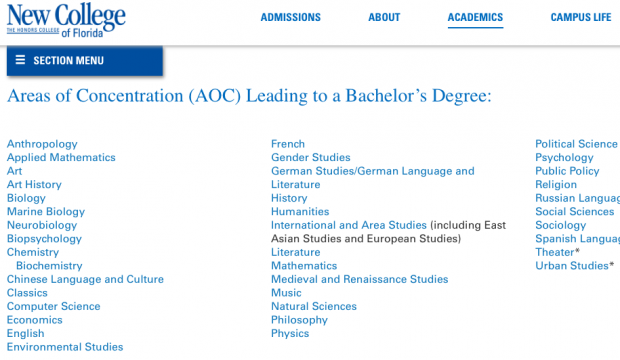
An Area of Concentration in Marine Biology allows students to build a strong foundation in basic biological concepts, with an emphasis on marine organisms and ecosystems. This program of study is designed to prepare students for graduate or professional studies in marine biology, biological oceanography, or related fields, as well as for professional careers in marine or environmental fields.
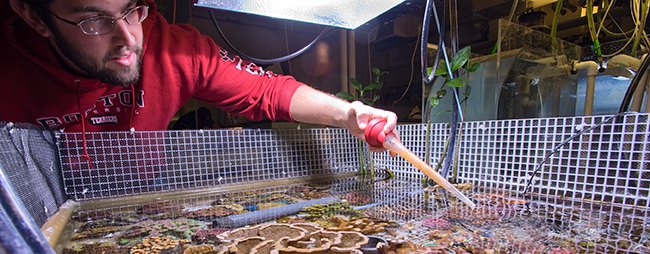
New College is situated on Sarasota Bay and our students have the opportunity to study and conduct research at the Pritzker Marine Biology Research Center, located on our Bayfront Campus. The Center is home to more than 100 aquaria, anchored by a 15,000 gallon research and display tank. Each tank in the Living Ecosystem Teaching and Research Aquarium features different captive ecosystems, including a cold-water rocky shore and Sarasota Bay grass flats. Through a natural filtration system designed by students, the Center draws and recycles water from Sarasota Bay.
boston university marine biology undergraduate
Boston University has a world-class program in marine biology that is active in training students at both the undergraduate and graduate level. The Marine Biology research group includes professors who are leaders in their subdisciplines, including evolutionary and conservation genetics of marine organisms marine microbial ecology, marine community ecology, and marine conservation science.
Research Marine Biology faculty and their students are involved with subjects such as biomimicry, functional genomics, marine exploration, and marine conservation. Their work is focused on addressing the issues of overfishing, global climate change, and marine species extinction and are working at the cutting edge of scientific efforts to combat overfishing, global climate change, and marine species extinction. Our research is strengthened by close ties between Biology faculty and colleagues from the Department of Earth & Environment. In addition, both faculty and students enjoy the benefits of Boston University’s formal partnerships with the New England Aquarium, the Stellwagen Bank National Marine Sanctuary, the Sea Education Association, and a variety of government and non-governmental marine conservation organizations.
MARINE BIOLOGY AREA OF CONCENTRATION (AOC)
An Area of Concentration in Marine Biology allows students to build a strong foundation in basic biological concepts, with an emphasis on marine organisms and ecosystems. This program of study is designed to prepare students for graduate or professional studies in marine biology, biological oceanography, or related fields, as well as for professional careers in marine or environmental fields.
New College is situated on Sarasota Bay and our students have the opportunity to study and conduct research at the Pritzker Marine Biology Research Center, located on our Bayfront Campus. The Center is home to more than 100 aquaria, anchored by a 15,000 gallon research and display tank. Each tank in the Living Ecosystem Teaching and Research Aquarium features different captive ecosystems, including a cold-water rocky shore and Sarasota Bay grass flats. Through a natural filtration system designed by students, the Center draws and recycles water from Sarasota Bay.https://www.youtube.com/embed/XcvhFEoRzxo
Faculty
- Erika Diaz-Almeyda Assistant Professor of Biology and Environmental Studies
- Jayne Gardiner Associate Professor of Biology; Director of Pritzker Marine Biology Research Center
- Sandra Gilchrist Professor of Biology & Marine Science, Division Chair
- Brad Oberle Associate Professor of Biology and Environmental Studies
- Athena Rycyk Assistant Professor of Biology and Marine Science
- Gerardo Toro-Farmer Assistant Professor of Coastal and Marine
Major in Marine Science
For students declaring the major before Fall 2018
Core Introductory Course
- Oceanography (ES144), including discussion/lab section for Marine Science majors.
Biology
- Biology I (BI107)
- Biology 2 (BI108)
Chemistry
- CH101 and CH102 (for science majors and premedical students, recommended track for Marine Science majors)
- OR CH109 and CH110 (for biochemistry and molecular biology majors)
- OR CH111 and CH112 (for chemistry majors and well-prepared science and pre-medical students)
- OR CH171 and CH172 (this is a terminal sequence)
- OR CH171 and CH174 (this sequence allows students to also take CH273).
Calculus
- Calculus I (MA123) and Calculus II (MA124)
- OR MA 121 and MA 122
- OR the single semester equivalents of Enriched Calculus (MA127) or Honors Calculus (MA129).
Statistics
- Basic Statistics and Probability (MA213) OR MA 115.
Physics
- General Physics (PY211) OR PY 105.
Marine Breadth Requirement. Three courses chosen from the following four options:
- One course in marine biology, BI 260, or BI 594.
- One course in marine chemistry, ES/BI 423.
- One course in marine geology, ES 331, or ES 440.
- One course in physical oceanography, GE/ES 507
boston university marine biology acceptance rate
The Boston University Marine Program provides a rigorous interdisciplinary education in marine science. Our curriculum encompasses the biological, chemical, geological, physical, and spatial dynamics of marine systems. All Marine Science majors and minors complete the Marine Semester , an intellectually and physically demanding sequence of four consecutive research-based courses. This often transformative experience immerses students in faculty research and exposes them to pressing issues impacting marine ecosystems. We strive to prepare our graduates for top jobs in marine science and for positions in elite graduate programs. In Fall 2020, we marked the 35th anniversary of the Marine Semester.
We aim to increase marine literacy and contribute to the worldwide effort to preserve and protect threatened marine ecosystems and sustainably manage critical marine resources. The BU Marine Program includes courses and faculty from both Biology and Earth & Environment . Coursework for the program will take students from the Boston waterfront to the deck of a NOAA research vessel plying the waters of Massachusetts Bay, from New England’s urban wetlands to the crystal clear waters along the MesoAmerican Barrier Reef.
The Bachelor of Science in Marine Biology major begins with a first- semester freshman course in marine science field methods. By the numbers: 74% acceptance rate; SAT Mid-ranges: CR 460-550, M 470-580; ACT Mid-range: 20-25.
Boston University Marine Biology Requirements
Course Requirements
All BU undergraduate students, including both entering first-year and transfer students, will pursue coursework in the BU Hub, the University’s general education program that is integrated into the entire undergraduate experience. BU Hub requirements can be satisfied in a number of ways, including coursework in and beyond the major as well as through cocurricular activities. Students majoring in Marine Science will ordinarily, through coursework in the major, satisfy BU Hub requirements in Scientific Inquiry, Quantitative Reasoning, Ethical Reasoning, Oral and Signed Communication, and in the Intellectual Toolkit. Remaining BU Hub requirements will be satisfied by selecting from a wide range of available courses outside the major or, in some cases, cocurricular experiences.
The Marine Science major provides a strong foundation in science and math via eight required related courses in biology, chemistry, calculus, physics, and statistics. Additionally, all students are required to take Introduction to Oceanography (CAS EE 144), Marine Biology (CAS BI 260), three “marine breadth” courses, and the Marine Semester. During the Marine Semester, students choose four courses from approximately 16 diverse course offerings. A total of 17 4-credit courses are required for the major.
A grade of C or higher is required in all of the aforementioned courses to receive credit in the major. All required courses are 4 credit hours.
Core Introductory Courses (2)
- CAS BI 260 Marine Biology
- CAS EE 144 Introduction to Oceanography
Related Courses (8 total)
Biology
- CAS BI 107
- CAS BI 108
Chemistry
- CAS CH 101 and CH 102, or
- CAS CH 109 and CH 110, or
- CAS CH 111 and CH 112, or
- CAS CH 171 and CH 172
Physics
- CAS PY 105 or 211
Mathematics and Statistics
Students must complete:
- One calculus course from CAS MA 121 or 123
- One statistics course from CAS MA 115 or 213
- One calculus, statistics, or computer science course from CAS MA 122, 124, 115, 213, CAS CS 105, 108, 111
Marine Breadth Courses (3 total)
It is recommended that students take a variety of courses to cover the breadth of Marine Science: Biological Oceanography (BO), Marine Biology (MB), Physical Oceanography (PO), Chemical Oceanography (CO), Marine Geology & Geophysics (MG), and Marine Spatial Dynamics (MSD).
Choose 3 courses from:
- CAS BI 303 Evolutionary Ecology (MB)
- CAS BI 500 Biology of Sharks (MB)
- CAS BI 509 Metapopulation Ecology (MB)
- CAS BI 519 Theoretical Evolution Ecology (BO, MB)
- CAS BI 550 Marine Genomics (MB)
- CAS BI 586 Ecological and Evolutionary Genomics (BO, MB)
- CAS EE 142 Beaches and Nearshore Systems (PO)
- CAS EE 310 Climate and the Environment (PO)
- CAS EE 351 Paleoclimatology and Paleoceanography (PO, MG)
- CAS EE 422 Aquatic Optics and Remote Sensing (CO, MSD)
- CAS EE 423 Marine Biogeochemistry (BO, CO)
- CAS EE 505 Geographic Information Systems (MSD)
- CAS EE 507 Dynamical Oceanography (PO)
- CAS EE 533 Quantitative Geomorphology (MG)
- CAS EE 576 Aquatic Geochemistry (CO)
Marine Semester Courses (4 total)
The Marine Semester is held every fall semester. Students are required to select one course during each of four “blocks.” Each block comprises 18–20 class days.
Marine Semester courses currently include:
- CAS BI/EE 523 Marine Urban Ecology
- CAS BI 531 Ichthyology: Behavior, Ecology, and Evolution of Fish
- CAS BI/EE 539 Coral Reef Dynamics: Shallow Waters, Deep Time (with fieldwork in Belize)
- CAS BI 541 Coral Reef Restoration and Resilience (with fieldwork in Belize)
- CAS BI 546 Marine Megafaunal Ecology: Stellwagen Bank National Marine Sanctuary and Surrounding Waters
- CAS BI 548 Marine Microbial Ecology
- CAS BI 569 Tropical Marine Invertebrates (with fieldwork in Belize)
- CAS BI/EE 578 Marine Geographic Information Science
- CAS BI/EE 591 Bio-Optic Oceanography
- CAS BI/EE 593 Marine Physiology & Climate Change
- CAS EE 542 Coastal Ecosystems
- CAS EE 543 Estuaries and Nearshore Systems
- CAS EE 544 Coastal Sedimentology
- CAS EE 557 Oceanography of Stellwagen Bank and Surrounding Waters
- CAS MR 500 Topics in Marine Science
- CAS MR 529 Tropical Marine Fisheries (with fieldwork in Belize)
- CAS MR 533 Scientific Diving and Underwater Research Methods
Marine Semester course offerings may vary from year to year. Contact the BUMP office for the latest offerings.
Note: In lieu of one of the four Marine Semester block courses, students may enroll in 4 credits of Research for Credit. Research for Credit during the Marine Semester must be prearranged with a Marine Science faculty member and approved by the Marine Program Director.
Undergraduate Research Options
The BU Marine Program strongly encourages hands-on research at the undergraduate level and offers each student the opportunity to spend time in a marine field environment or laboratory setting. A maximum of 12 research credits may be counted as elective courses.
Sophomores:
- CAS MR 291/292 (2 credits per semester; does not count toward the major)
Juniors and seniors:
- CAS MR 391, 392 or CAS MR 491, 492
Honors in the Major
Qualified seniors can earn Honors in the Major by completing a two-semester, two-course sequence of Research for Credit (CAS MR 401/402) culminating in the production of a written thesis and an oral thesis defense before a committee of three Marine Program faculty. Registering for MR 401/402 involves preparation of a research proposal developed in consultation with your faculty research advisor, and approval of the proposal by the Marine Program Director. GPA requirements are 3.25 overall and 3.5 within the major.

boston university marine biology cost
Billed expenses for the 2022/2023 academic year*
| Tuition | $61,050 |
|---|---|
| Room (depending on type of accommodation) | $11,260 |
| Board (most dining plans) | $6,140 |
| Fees | $1,310 |
| TOTAL ESTIMATED BILLED EXPENSES | $79,760 |
+
Other expenses
| Books and Supplies | $1,000 |
|---|---|
| Personal Expenses | $1,370 |
| Local Transportation (average) | $630 |
| TOTAL OTHER EXPENSES | $3,000 |
| = Total Cost of Attendance | $82,760 |
|---|

Leave a Reply