
If you are reading about master in data science barcelona graduate of economics for the first time, it may seem overwhelming to those who have not previously done so, but you will probably find it fascinating.
You’ll also find more information about other topics like barcelona graduate school of economics masters, barcelona graduate school of economics acceptance rate, barcelona graduate school of economics ranking, graduate school of economics qs ranking, barcelona graduate school of economics fees, university of barcelona data science, barcelona graduate school of economics summer school, barcelona graduate school of economics barcelona gse on collegelearners.
Master in Data Science Barcelona is an innovative program developed by the Graduate School of Economics at the Autonomous University of Barcelona. The objective of this Master degree is to prepare students with high-quality specialized knowledge in Data Science, who will be able to apply their skills within the fields of research, government and industry. To achieve our goal we work with leading experts in data science to develop a new curriculum that emphasizes both theory and practice, providing students with practical knowledge how to effectively use methods and tools for extracting meaning from large volumes of data in a variety of applications.

Master’s Degree in Data Science: Data Science for Decision Making Program
The aster’s Degree in Data Science: Data Science for Decision Making program will help you harness the power of data to inform decision-making. You will acquire foundational knowledge in data science, statistics and mathematics, as well as learn how to apply these skills in real-life scenarios. You’ll develop your communication skills with industry experts through presentations, case studies and group discussions.
masters Degree in Data Science: Data Science for Decision Making Program is designed to train you in data science and big data applications. The program focuses on real-world challenges faced by organizations, and equips you with the skills you need to become an effective practitioner of data science. You will learn how to shape meaningful insights from large volumes of data, make well-informed decisions, and communicate your results to a variety of audiences.
Aster’s Degree in Data Science: Data Science for Decision Making program provides the cutting-edge skills and know-how needed to thrive in today’s data-driven economy. You’ll gain hands-on experience using artificial intelligence, machine learning, predictive modeling, deep learning and statistical analysis software packages to solve real-world business problems. Focus areas include Analytics Applications, Big Data Analytics (including Hadoop), Business Intelligence Tools, Data Visualization and Reporting.
Master in Data science at barcelona
The demand for Data Scientists is exploding, driven by the increasing availability of data and the advance of machine learning. Data collection and analysis have become crucial components of decision making in today’s private and public organizations and many have started to develop specialized departments for this purpose.
The ability to extract, handle, and analyze large amounts of data is therefore a key skill on today’s job market.
However, gathering and summarizing data is not enough. Data science can only improve decision making with an understanding of how choices affect outcomes. Data Scientists must therefore increasingly combine standard tools in machine learning with an understanding of the causal relationships behind the data.
The BSE Master’s Program in Data Science for Decision Making integrates key elements from Data Science and Economics to give graduates the ability to deal with all types of data and make the correct inferences from it.
Students will be trained in the use of cutting-edge machine learning methods and of statistical models that will help them to provide effective data support in the decision-making process of any organization. Students will, for example, be able to extract information from the structure of social networks, satellite images, large libraries of digitized text, read and visualize data in maps and make sense of geo-localized information and time series data. They will also be able to use this data for forecasting and evaluate different policy options or business strategies through models built on an understanding of causal relationships.
Study with leading researchers and practitioners
Data Science for Decision Makers integrates different approaches from Data Science, Statistics, Econometrics and Economics in a unique program taught by leading academics in the fields of Economics, Operations, and Statistics, as well as experienced professionals from the analytics industry and public policy consultants.
Work with real data on interdisciplinary teams
Students learn with real data to solve decision-making problems hands-on through homework, applied training sessions, and an independent Master’s project.
The collaborative environment of the program will expose students to working with colleagues from many different academic and professional backgrounds on interdisciplinary teams.
Is “Data Science for Decision Making” for you?
The Decision Making track is tailored to accommodate both recent graduates and those with work experience in private and public organizations. All students will benefit from a combination of training in programming, theoretical model techniques and hands-on applications which will allow them advance any decision making process in any organization. Students with work experience will be able to see the data in their own work environment with completely new eyes and realize the potential of untapped data resources like text and images.
Program schedule:
The Data Science for Decision Making Program is organized around four pillars:
- Statistics and Machine Learning
- Econometrics and Causal Identification
- Data Warehousing, Business Intelligence, and Text Mining
- Economics Models and Optimization for Decision-Making
Watch the videos for a quick overview of three courses in the program, then browse the full course list below:
Economics for Data-driven Decision Making
Prof. Caterina Calsamiglia (IPEG)
Foundations of Econometrics
Prof. Ursula Mello (IAE-CSIC and BSE)
Machine Learning and Causal Inference
Prof. Hanna Wang (MOVE, UAB and BSE)
Forecasting and Nowcasting with Text as Data
Prof. Hannes Mueller (IAE-CSIC and BSE), Program Director
Brush-up courses
In September, students are required to take two brush-up courses in Mathematics and Statistics. Students who can provide evidence of sufficient past coursework may be exempt:
| Course Title | Credits | Campus | Professor(s) |
|---|---|---|---|
| All courses are mandatory | |||
| Economics for Data-driven Decision Making | 6 | Bellaterra | Esther HaukLaurence Go |
| Foundations of Econometrics | 6 | Bellaterra | Maite CabezaHanna Wang |
| Computational Machine Learning I | 3 | Ciutadella | Jack Jewson |
| Computing for Data Science | 3 | Ciutadella | Roger Garriga |
Term 1 Extra Workshop: Digital Landscapes. What kind of world do we want to live in? (Ciutadella Campus). Instructors:
- Ricard Bonastre, co-founder & CEO at Lead Ratings
- Carles Murillo Mir, PhD in Hispanic Studies (Edinburgh), specializing in contemporary literature and existential philosophy
| Course Title | Credits | Campus | Professor(s) |
|---|---|---|---|
| Mandatory | |||
| Computational Machine Learning II | 3 | Ciutadella | Jack Jewson |
| Machine Learning and Causal Inference | 3 | Ciutadella | Aleix RuizHanna Wang |
| Text Mining: Models and Algorithms | 6 | Ciutadella | Hannes Mueller |
| Electives | |||
| Analysis of Spatial Data and Images | 3 | Ciutadella | André GroegerClement Gorin |
| Data Visualization | 3 | Ciutadella | Ioannis Arapakis |
| Networks: Concepts and Algorithms | 3 | Ciutadella | Pau Milán |
| Development Economics* | 6 | Ciutadella | Gianmarco León-Ciliotta |
| Political Economy* | 6 | Ciutadella | Ruben EnikolopovMaria Petrova |
| Course Title | Credits | Campus | Professor(s) |
|---|---|---|---|
| Mandatory | |||
| Master Project | 6 | Ciutadella | Coordinators: Christian Brownlees, Jesus Cerquides |
| Electives | |||
| Forecasting and Nowcasting with Text as Data | 3 | Ciutadella | Christian Fons-RosenHannes MuellerJavier Perez |
| Intelligent Data Development | 3 | Ciutadella | Laura Cozma Margarita Triguero-Mas Javier Mas Adell Caterina Casamiglia |
| Networks: Models and Applications | 3 | Ciutadella | Pau Milán |
| Machine Learning for Finance | 3 | Ciutadella | Argimiro Arratia |
| Advanced Topics in Applied Economics: Text Analysis for Economics and Finance* | 3 | Ciutadella | Ruben Durante |
* Course requires authorization by the program director as it is shared with other Master’s programs at the Barcelona GSE.
Master’s degree awarded
Upon successful completion of the program, students will receive a Master’s Degree in Data Science awarded jointly by Universitat Autònoma de Barcelona (UAB) and Universitat Pompeu Fabra (UPF).
This official Master’s Degree is in the process assessment by the Catalan and Spanish education authorities within the framework of the Bologna Process (in Spanish, “Master Universitario o Master Oficial”).
What skills and knowledge will I acquire in this program?
- Ability to provide adequate data analysis for decision-making problems in research, governments, firms, international organizations and NGOs.
- Ability to analyze the decision-making problem through the combination of applied data science and economics frameworks.
- Programming skills necessary to extract data from any source including text, images, social networks, geocodes and maps.
- Use and program cutting edge machine learning and econometric tools to analyze the resulting data.
- Gain expertise in database management and distributed processing in a cloud computing environment.
- Develop a deep understanding of the differences between correlation and causality and why this is crucial for optimal decision-making.
- Communicate data analysis results effectively through presentation and aesthetic charting skills.
- Ability to approach problems from different angles and to be aware of complementarities in knowledge on interdisciplinary teams.
Who will benefit from this program?
The goal of this Master’s program is to serve two profiles:
- The applied nature of the course aims to be accessible to students that have work experience in enterprises, government or international organizations and have worked with data inside these organizations.
- The program gives recent graduates with strong analytical skills the possibility to specialize in applied data work.
Given the diverse background of our students, there are no prerequisites in either Data Science or Economics. However, students will only be able to absorb the wealth of methods that are taught with some experience of working with data, very strong quantitative skills, and some prior knowledge in Statistics.
Students will learn how to use STATA and program in Python during the Master’s, but some experience in these two software packages will allow students to focus on the applications.Who hires Data Science graduates?
- Consulting Firms
- Financial Services
- Government & Authorities
- International Organizations / Non-profits
- Technology
- Research & Academic Institutions
- Other Industries
Faculty
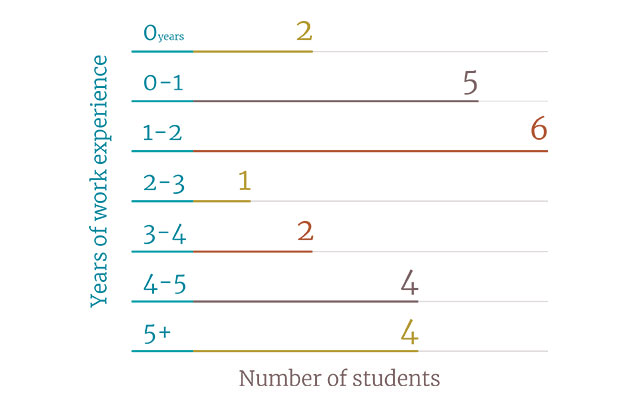
Students
Data Science for Decision Making Student Profile 2021-22
24 students from 17 countries (98% international)
Most represented countries this year:
- Germany (4)
- Colombia (3)
- Spain and chile (2 students each)
Most common academic backgrounds:
- Economics
- Engineering
Alumni
Build your career and your network
In addition to a track record of strong placements, the BSE Master’s programs offer access to a close-knit community of colleagues, mentors, and friends for life.
Your studies will be intense, but your academic environment doesn’t have to be. BSE programs foster a collaborative spirit among classmates and personal interaction with faculty.
This doesn’t end on graduation day. Students in the BSE Master’s programs become lifelong members of the BSE Alumni community, a thriving international network where they can connect socially and professionally for years to come.
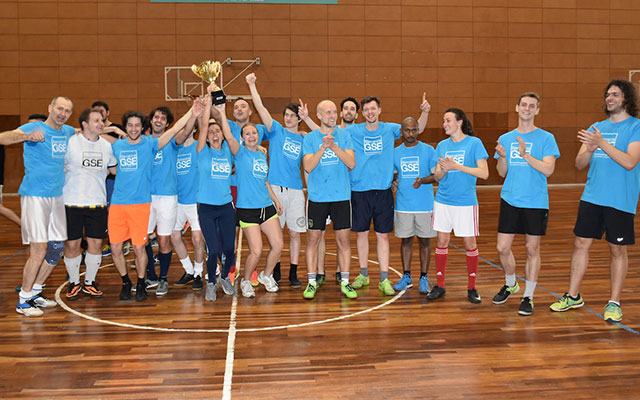
See past and upcoming events in the BSE Alumni community
Master’s Degree in Data Science: Data Science Methodology Program
Program Director
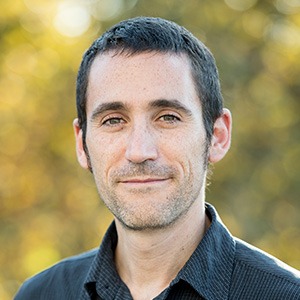
David RossellPhD, Rice University and MD Anderson Cancer CenterUPF and BSE
Steering Committee
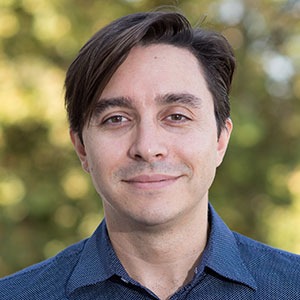
Christian BrownleesPhD, University of FlorenceUPF and BSE
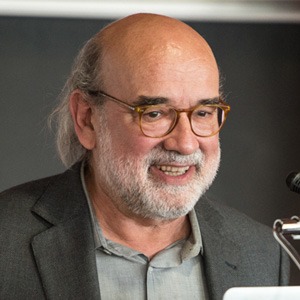
Frederic UdinaPhD, Universitat Politècnica de CatalunyaUPF and BSE

Gábor LugosiPhD, Hungarian Academy of SciencesICREA-UPF and BSE
Program details
Language of instruction: English
Structure:
September – July. Full-time
Credits: 60 ECTS
Campus: Ciutadella (UPF)
Degree awarded upon completion:
Master’s Degree in Data Science
(awarded jointly with UAB and UPF)
Tuition (2021-22): €18,500
Funding available for top candidates
Start your applicationGRE exam is optional but highly recommended (read more)
The digital revolution brings an explosion of data with significant value for businesses, science, and society. As data becomes larger and more complex, extracting useful quantitative insights becomes more challenging.
The BSE Master’s Program in Data Science Methodology aims to train future leaders in the field with a deeper understanding of the underlying methods, along with the ability to develop techniques for new and/or non-standard problems.
The Master’s prepares graduates to design and build data-driven systems in the private, public and research sectors. The curriculum guides students from modeling and theory to computational practice and cutting edge tools, teaching skills that are in growing global demand.
Data Science Methodology students will gain a solid knowledge of Statistics, Machine Learning theory and methods such as Reinforcement Learning and Deep Learning, Optimization and Computing. The program also prepares students to critically assess the validity and performance of existing methods, and to address potential limitations by developing new ones. Students will learn how to apply classroom examples using real data and answering concrete questions from the perspectives of different sectors. Through an independent master’s project or an industrial practicum conducted with local businesses or research teams, students have the opportunity to solve actual analytics problems hands-on.
Study with leading researchers and practitioners
A distinguishing factor of the program is the faculty team, with a strong international research and applied reputation spanning multiple fields: Statistics, Operations Research, and Artificial Intelligence. Our professors routinely publish in top research journals in these disciplines and received prestigious awards and research funding from agencies and the industry. These include the main funding agencies in Spain, the European Research Council, the USA, and the UK, leading technological companies such as Google and Accenture, and banks such as BBVA and CaixaBank. The program also invites guest speakers and entrepreneurs working at the frontiers of Data Science Methods and applications.
The new program director, David Rossell (UPF and BSE), is a leading researcher in statistical methodology who has been involved in a number of highly cited applied projects ranging from Biomedicine, Economics to Biochemistry. He held research appointments in Spain, the USA and the UK, and has led teams of applied data scientists at several institutions.
Is “Data Science Methodology” the right program for you?
We welcome students from different disciplines. The ideal candidates have graduated in programs with a solid mathematical basis, e.g. statistics, economics, mathematics, computer science, physics, or engineering. However, we also welcome candidates from other disciplines having excellent academic records, who wish to develop their data analysis abilities. The program includes brushup courses in Statistics, Linear Algebra and Programming, to ensure all students have a sufficient basic toolkit. For students interested in more theoretical studies, the program also opens up an opportunity of continuing with PhD studies in a dynamic, active research environment.
Accenture Data Science Scholarship
Accenture sponsors a full scholarship for one student in the BSE Data Science Methodology Program.
Scholarship criteria and details
BSE Data Science Center Scholarships
The Data Science Center offers scholarships in the form of research assistantships (RAs) that require the student to be involved with the Center’s data science projects.
About the BSE Data Science Center
Program schedule:
The Data Science Methodology Program is organized around four pillars:
- Statistics and Machine Learning
- Optimization and Operational Research
- Data Warehousing, Business Intelligence, and Big Data Analytics
- Economics, Finance, and Policy-Making
The course offer displayed is for next year’s edition (2021-22). Course offer is subject to change.
Course list for current students (2020-21)
Brush-up courses
In September, students are required to take two brush-up courses. Students who can provide evidence of sufficient past coursework may be exempt:
- Introductory and intermediate computing for Data Science
- A modern crash course in intermediate Statistics and Probability
| Course Title | Credits | Professor(s) |
|---|---|---|
| Mandatory |
| Course Title | Credits | Professor(s) |
|---|---|---|
| Mandatory | ||
| Master Project | 6 | Coordinator: Jack Jewson |
| Electives | ||
| Industrial Practicum Complements the master project with credits if student is placed in company working full-time | 6 | Subject to availability and selection process. Coordinator: Jack Jewson |
| Stochastic Models and Optimization | 3 | Gergely Neu Hrvoje Stojic |
| Networks: Models and Applications | 3 | Pau Milán |
| Machine Learning for Finance | 3 | Argimiro Arratia |
| Blockchain: From First Principles to Analytics | 3 | Coordinator: Craig Chatfield |
| Advanced Topics in Applied Economics: Text Analysis for Economics and Finance** | 3 | Rubén Durante |
** Requires some prerequisite knowledge and authorization of the program director. Availability depending on sufficient demand.
Master project
The master project is a required component of all BSE Master’s programs. Working individually or in groups, students use the tools and knowledge they’ve acquired during the entire year to explore a topic of their choice. A professor supervises throughout the project.
Examples of master projects from recent Data Science cohorts
Select a project to view a summary on the BSE Voice, our student and alumni blog:
Tracking the Economy Using FOMC Speech Transcripts
Laura Battaglia and Maria Salunina
Scalable Inference for Crossed Random Effects Models
Maximilian Muller
Labor mobility networks as counterfactual models for policy evaluation
Aron Pap
Master’s degree awarded
Upon successful completion of the BSE Data Science Methodology Program, students will receive a Master’s Degree in Data Science awarded jointly with Universitat Autònoma de Barcelona (UAB) and Universitat Pompeu Fabra (UPF).
All BSE Master’s degrees have been recognized by the Catalan and Spanish Education authorities within the framework of the Bologna Process (in Spanish, “Master Universitario o Master Oficial”).
Quality indicators for this Master’s degree
What skills and knowledge will I acquire in this program?
- Ability to develop new methodologies and algorithms
- Expertise in modern computational, high-dimensional and simulation-based Statistics and Machine Learning
- Research attitude towards Data Science with sufficient maturity and knowledge to continue developing scientifically for years after graduation
- Solid evaluation of the opportunities of data-driven value creation within companies and organizations
- Proficiency in database management systems and distributed processing in a cloud computing environment
- Experience analyzing Big Data from the Internet of Things (industrial sensor data), the Internet of People (social and location data), and business transaction data
- Effective communication of data analysis results through presentation and aesthetic charting skills
Who will benefit from this program?
Data Science students usually come from backgrounds primarily in Economics, Physics and Engineering. Successful candidates have strong interest in becoming developers of Data Science methodologies and algorithms, they are committed to remain up to date with current scientific developments in the field and have real interest in both the foundations of the field and real-life and large-scale applicationsStudent profile in more detailIndustrial Practicum
The industrial practicum is an in-depth analytics project that takes place during the final three months of the master. The practicum gives Data Science students the opportunity to complete a “deep dive” analytics project using real data from selected companies around Barcelona.
Students will dedicate 300 hours to the practicum, collaborating with companies on-site using real data to solve a specific challenge that requires the types of “skill bundles” they have acquired during the first two terms of the master program.
Companies that have expressed interest in offering practicum projects to BSE students include commercial banks, consulting firms, mobile application developers, risk analysts, and online retail platforms, among others. With a wide menu of companies competing for their attention, students are very likely to be matched with a practicum in the industry where they might prefer to work after graduation.
Some of the companies collaborating with the industrial practicum are:
















Sample practicum project titles
- Skill Assessment of Seasonal Temperature and Precipitation Forecast over Europe
- Client Clusterization Among Banking Clients
- Voice Feature Analytics for Early Detection of Parkinson Disease in Speech
- Player Retention in Mobile Gaming: Social Interactions
- Optimizing Transport Simulation Systems
- Smart Tourism
- Volatility Clustering for Financial Risk Management
- Augmenting Mobile Phone Data with Public Data for Credit Scoring
- Dimensionality Models and Optimization of Network Distributions
- Redundancy in Government Documents
Who hires Data Science Methodology graduates?
Examples of recent professional placements:
| Company | Position | Industry | Location |
|---|---|---|---|
| Accenture | Analyst | Consulting | Barcelona |
| Barcelona Supercomputing Center (BSC) | Data Scientist | Research | Barcelona |
| Blackrock | Data Scientist | Consulting | London |
| Central Bank of Chile | Head of Economic Surveys and Administrative Records | Government & Agencies | Santiago |
| Criteo | Data Scientist | Advertising & Marketing | Paris |
| ESADE | Research Assistant | Research & Academia | Barcelona |
| European Central Bank (ECB) | Trainee | Government & Agencies | Frankfurt |
| European Investment Bank (EIB) | Trainee | Government & Agencies | Luxembourg |
| Fresenius Medical Care | Junior Data Scientist | Healthcare | Berlin |
| International Labour Organisation (ILO) | Data Scientist | International Organizations | Geneva |
| “la Caixa” Business Intelligence | Data Scientist | Banking & Finance | Barcelona |
| Munich Airport | Data Scientist | Aviation | Munich |
| Novartis | Advanced Analytics Specialist | Healthcare | Barcelona |
| Socialpoint | Game Data Scientist | Gaming | Barcelona |
Alumni career paths in more detail
Faculty
Students
Data Science Methodology Student Profile 2021-22
23 students from 15 countries (92% international)
Most represented countries this year:
- Spain (8)
- Colombia (2)
Most common academic backgrounds:
- Economics
- Computer Science
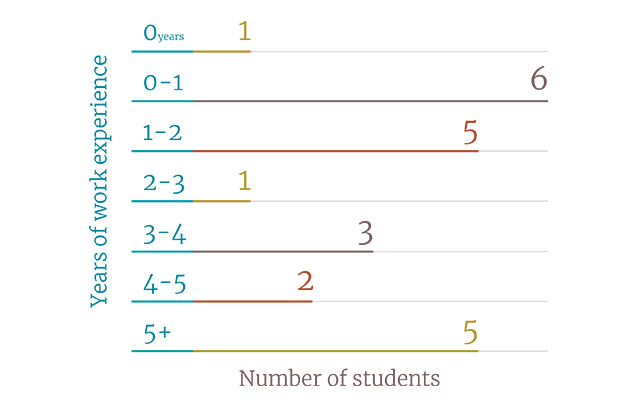
View examples of past work experience and more in the Data Science Methodology Student Profile
Alumni
Data Science alumni career paths
Overview of Data Science career paths
-
Most common job titles:
Data Analyst, Data Scientist, Consultant -
Most common industries:
Technology, Financial Services, Consulting -
Cities with most Data Science alumni:
Barcelona, London, Frankfurt
To read personal career stories by Data Science alumni, visit the Data Science Program Ambassadors page.
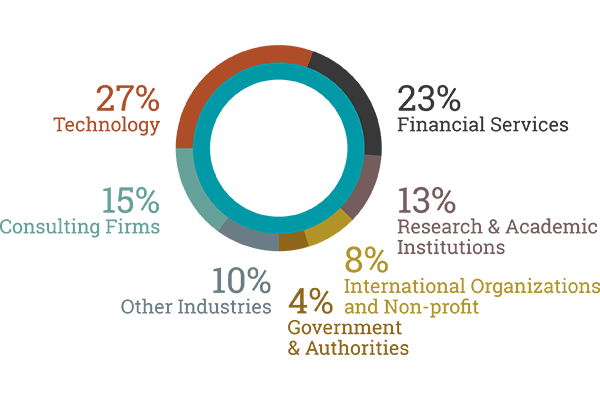
Explore Data Science career paths
- Yabra Muvdi ’20Originally fromColombiaCurrently living inSpain I never thought I could learn so much in such a short time. The Master’s in Data Science at BSE was an exciting and fast-paced opportunity for me to acquire foundational knowledge in a broad range of subjects…
-
 Max Mueller ’20Master’s Student in PhysicsOriginally fromGermanyCurrently living inGermany With a background in Physics, I chose this Master’s mostly because I wanted to understand what is going on behind the Machine Learning and Data Science tools that are a big part of everyday life for many scientists.

Leave a Reply