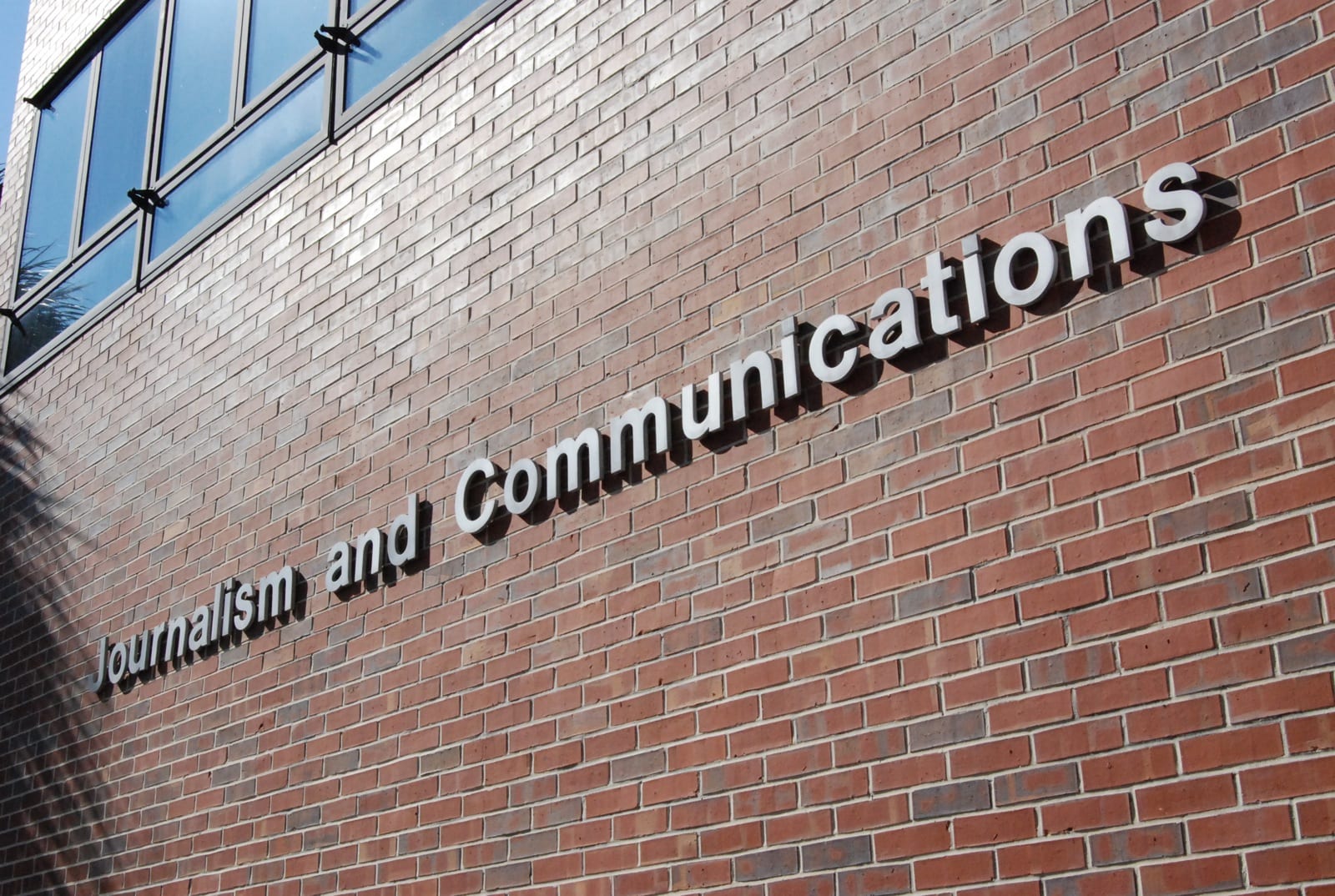
Media Studies degrees teach students about media channels, focusing on mass-media and its history, content, and social impact. Students learn about traditional (radio, television) and modern mass-media (social networks, vlogs). Typical Media Studies include classes on Ethics and Journalism, Legal Issues in Communication, and Visual Culture. Graduates work as media planners, PR officers, or social media managers.
Mass communication(s) is a broad field, spanning traditional media to contemporary, technology-driven new media (e.g. web and social media). At its core, mass communication is messaging that is created for, delivered to and consumed by large audiences. A comprehensive academic discipline, the study of mass communication considers the function and effects of media in its various forms and how it is shaped by and impacts social, cultural, political, and social institutions.
Whether it is the study of how media influences social activities and trends or how consumer behavior informs advertising methods, doctoral-level studies in mass communication integrate communication theory, research methods, and critical analysis. The Ph.D. in mass communication prepares students to become academics, teachers, and researchers, but may also offer them pathways to careers in media-related industries, such as public relations, journalism, advertising, and mass media.
At the Ph.D. level, students in mass communication programs gain a foundation in the core principles of mass communication theories and research methodologies that prepare them not only for independent research opportunities, but also to teach at institutions of higher education. Typically, mass communication programs are housed in schools and departments of communication, mass communication, and journalism. Many are offered through joint programs in schools of journalism and mass communication, including the following:
A few of the top-ranking universities in USA offering a Masters in Journalism according to QS Rankings 2020 are tabulated in the table below. The table also details the annual fees of the program and the degree offered.
| Rankings | Universities | Program Name | Annual Fees (in USD) |
|---|---|---|---|
| 2 | Stanford University | MA Journalism | 54,315 |
| 18 | Columbia University | MA Journalism | 58,764 |
| 28 | University of California Berkeley Campus | MA in Journalism | 31,187 |
| 31 | Northwestern University | MS in Journalism | 60,704 |
| 56 | University of Wisconsin- Madison | MA Journalism and Mass Communication | 25,315 |
| 65 | University of Texas at Austin | MA Journalism | 26682 |
| 98 | Boston University | MS in Journalism | 55,502 |
| 129 | University of Southern California | Master of Science in Journalism | 59,653 |
| 561-570 | University of Nebraska-Lincoln | MA in Journalism and Mass communication | 19,749 |
| 801-1000 | University of Mississippi | MA in Journalism | 26,926 |
With over 100 US universities offering a journalism masters degree in USA, international students can find a wide variety of program curriculum to choose from. Masters in journalism in USA is available as full-time, part-time, online, and distance learning program helping students to pursue the degree as per their preference.
Applicants to doctoral programs in mass communication are usually expected to have a demonstrated interest in communication research by completing a master’s degree in communications or a related field. However, depending on the communication research specialization (e.g. science, politics), some programs may accept students with a graduate degree in other fields, such as biology or political science. Students should note that some Ph.D. programs require applicants to have completed a thesis as part of their master’s program as opposed to an applied project or passing a comprehensive exam.
There are some Ph.D. programs in mass communication that accept post-baccalaureate students without a master’s degree. However, these programs are not as common as traditional Ph.D. programs in mass communication that require a master’s degree for admission. Programs that admit students with only a bachelor’s degree typically require students to enroll in a master’s-level curricula plan, comprised of master’s level courses that students would have taken had they completed a master’s degree in mass communication. Once they complete this foundational coursework, student take a qualifying examination to gain entrance into the doctoral program. If they fail that examination, students earn a master’s degree and exit the communications program.
Although admission requirements vary, most mass communication programs share common admission elements, including the following:
The curriculum in a Ph.D. in mass communication program is divided between required core coursework (which typically includes classes in research methods), specialized coursework, secondary expertise coursework, and a dissertation. Mass communication is inherently interdisciplinary, bringing together mass media and messaging, including journalism, mass advertising, and social media, and other disciplines, such as health, cultural studies, and technology. Due to this discipline’s complexity, doctorate programs in mass communication typically have classes and seminars that cover mass communication principles and research competencies, as well as their relevance in the social sciences, politics, health care, and other fields. Scholars of mass communication may explore the relationship between mass communication and public health outcomes, or the connection between mass communication and the public’s perception of political figures and policies.
The core curriculum introduces students to research design and methodology in mass communication, covering topics such as mass communication theory, communication research methods, and communication pedagogy. Traditionally speaking, the core curriculum is usually offered in a three-to-four course cycle that prepares students to transition into their primary doctoral coursework in their selected academic concentration, such as information technology or entertainment media.
Depending on the institution, students complete research methodology classes (typically two to three classes) to learn how to conduct research and use historical and traditional inquiry models to mature as a systematic researcher who can contribute original research and thought to the mass communication field. After gaining an understanding of qualitative and quantitative research methodologies, students complete their second year of study in concentration-specific coursework. Concentration and elective classes vary by program, but usually require five to eight courses to satisfy graduation requirements.
After their first two years of study, students complete preliminary written and oral examinations prior to transitioning into full doctoral program candidacy to complete a dissertation. Once they pass their examinations, students spend the remainder of their time in the program planning their dissertation prospectus, conducting research, and finally writing their dissertation.
Admission applications to most universities in the USA can be made online through the university website or through the PDF forms available for graduate admissions. Applicants will have to download and fill-up the form or apply through the university graduate admission portal. The admission application fee in the USA ranges from 40 USD to 90 USD.
Looking for Admissions here? or need Help?Register Now
To be eligible for admissions to Masters in Journalism in the USA, an applicant is required to complete a bachelor’s degree in Journalism or English
The table below details the cut-off of various exams required to study in USA:
| University | TOEFL Score | Minimum IELTS Score | Minimum GRE Score (quant) |
|---|---|---|---|
| Stanford University | 100 | — | 155 |
| Columbia University | 100 | 7.5 | NA |
| University of California Berkeley | 90 | 7 | 155 |
| Northwestern University | 100 | 7 | 154 |
| University of Wisconsin- Madison | 92 | 7 | 157 |
| University of Texas at Austin | 79 | — | NA |
| Boston University | 90-100 | 7 | NA |
| University of Southern California | 114 | 8 | NA |
The required documents for admissions to Masters in Journalism in USA are:
For studying in USA, an applicant needs to apply for an F-1 student visa to the USA.
It is advised that international students begin their visa process at least 120 days prior to your travel to the USA. International students will also be required to appear for an interview with the US Embassy or Consulate to get their student visa to the USA.
Studying abroad in the USA can cost students a fortune. Costs involved for studying Masters in Journalism in USA include pre-arrival costs, tuition fees, and the cost of living. All the costs involved in studying Masters in Journalism in the USA are mentioned below.
The pre-arrival costs to study in the USA include costs like the test fees, application fee, visa fee. The various pre-arrival cost specifications and their costs are tabulated below:
| Expenses | Estimated cost (in USD) |
|---|---|
| TOEFL | 170 |
| IELTS | 250 |
| SEVIS Fee | 350 |
| GRE | 205 |
| Flight fare | 700 |
| Student Visa Fee | 170 |
The tuition fees for Masters in Journalism in USA are depicted in the chart below:
The overall cost of pursuing a master’s degree in journalism in USA for an Indian student ranges between 30 lakhs to 91 lakhs. This may seem too much for an Indian student but what makes graduate schools of US stand out are the outstanding opportunities available as soon as you complete the degree and world-class education.
The costs of living vary with the type of student housing in the USA, living standards, and most importantly the city. The cost of living in a smaller city in the USA can be around 800 USD a month and for a big city, the cost of living can go up to 1,300 USD per month. The estimated costs are tabulated below:
| Expenses | Costs per month(in USD) |
|---|---|
| Apartment | 1000-2000 |
| Meals | 120-160 |
| Transportation | 100-300 |
| Personal Expenses | 300-600 |
| Health Insurance | 450-700 |
International students are required to estimate their budget to study in the USA. To lower the costs of studying Masters in Journalism in the USA, international students can apply for two types of scholarships:
University-specific Scholarships- These scholarships are provided by respective universities to the international students enrolling in a course at that university.
General Scholarships- These scholarships are offered by some trusts or governments to international students.
Here are some of the scholarships for international students in USA to study Masters in Journalism:
| Scholarship | Awarding Institute | Scholarship Award |
|---|---|---|
| Fulbright Foreign Student Program | — | Tuition fees, Health insurance, Living costs, etc. |
| Global Scholars Award | Boston University | Upto 5,000 USD per year |
| Inlaks Shivdasani Foundation Scholarship | Inlaks Shivdasani Foundation | 100,000 USD |
| American Association of University Women in US | American Association of University Women | 18,000 USD |
| SheBegan International Scholarship for Women | — | 28,000 USD |
| Young Professionals Program | World Bank Group | Amount Varies |
Looking for more scholarships available to study in the USA? Find out details here.
After completing masters in Journalism students can get various job opportunities in the USA such as news agencies, content developing firms, media houses and magazines, and journal agencies. There are a variety of job roles for which a journalism student can apply for. Another upcoming and attractive job role for which journalism students are often hired are content writers for web-based
The various roles taken up by a graduate of Masters in Journalism in the USA include reporter, journalist, editor, news or video producer, etc. The table below shows the average annual salary in the USA.
| Occupation | Average Yearly Salary (in USD) |
|---|---|
| Reporter | 53,000 |
| Journalist | 50,000 |
| Editor | 63,000 |
| News Producer | 52,000 |
| Communications manager | 68,000 |
| Video Producer | 60,000 |
| News Reporter | 43,000 |
| News Anchor | 72,000 |
The USA is one of the top international student destinations because of its educational facilities. If you pursue your dream of becoming a successful journalist or a news editor, a Master’s Degree from the USA would open new ventures in your career. You will be able to choose from the top-ranking universities in the USA and post the two-year degree you can choose from companies like the New York Times, CNN, etc. The job prospects are also high with a 12% increase every 16 months for a journalist in the USA. Additionally, USA is one of the highest paying countries for journalists making the program a lucrative degree with cushy median salaries.